
Cost of TV Mounting
The cost of TV Mounting is one of the questions many people have after purchasing a TV and want it safely and professionally mounted for easy viewing. Not all TVs fit with all TV mounts. In order to make it easier for consumers to decide which mounts to buy TVs come with standard mounting sizes, known as the VESA size. The VESA number of a TV should correspond with the number of the bracket that will be used to mount it to the wall. You can find out the VESA size of a TV by reading the instruction manual or looking it up online.
Types of Wall Mounts:
Fixed or Low-Profile:
This is the easiest, cheapest and fastest wall mount to install. The TV is mounted parallel and close to the wall. Since it is one of the most basic forms of wall mounts it doesn’t have the benefits that more advanced versions have, for example, the low-profile mount does not offer vertical or horizontal movement. Additionally, to install or remove cables from the TV the user must remove the TV from the bracket and replace it after.
Tilting:
This form of mount allows vertical adjustment of the viewing angle. The TV can be tilted to avoid glare or reflection, however, this mount does not allow for horizontal movement.
Full Motion:
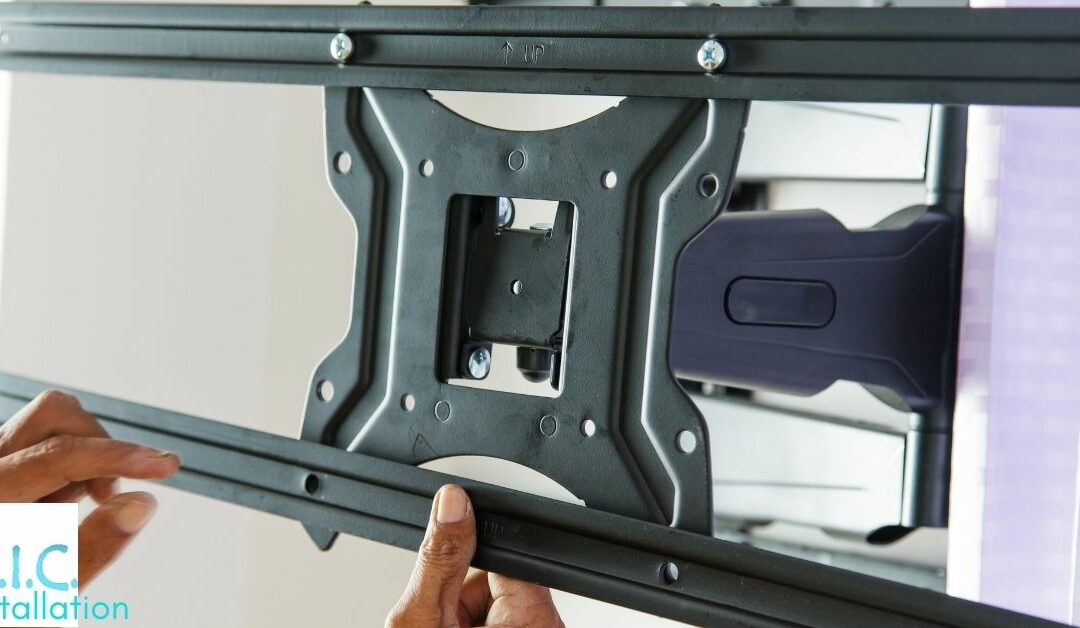
Full motion mounts offer the widest range of viewing angles. Manufacturers also call this mount the swivel, extending arm, and articulated mount. A bracket is mounted onto the wall and an arm extends outwards. The arm can be minimized to make it look like the TV is directly against the wall and can be extended to allow horizontal and vertical angle adjustment. This mount is more expensive than other wall mounting options, however, is cost-effective for the viewing benefits.
Which TVs Can Be Mounted?
Not all TVs fit with all TV mounts. In order to make it easier for consumers to decide which mounts to buy TVs come with standard mounting sizes, known as the VESA size. The VESA number of a TV should correspond with the number of the bracket that will be used to mount it to the wall. You can find out the VESA size of a TV by reading the instruction manual or looking it up online.
Types of Wall Mounts:
Fixed or Low-Profile:
This is the easiest, cheapest and fastest wall mount to install. The TV is mounted parallel and close to the wall. Since it is one of the most basic forms of wall mounts it doesn’t have the benefits that more advanced versions have, for example, the low-profile mount does not offer vertical or horizontal movement. Additionally, to install or remove cables from the TV the user must remove the TV from the bracket and replace it after.
Tilting:
This form of mount allows vertical adjustment of the viewing angle. The TV can be tilted to avoid glare or reflection, however, this mount does not allow for horizontal movement.
Full Motion:
Full motion mounts offer the widest range of viewing angles. Manufacturers also call this mount the swivel, extending arm, and articulated mount. A bracket is mounted onto the wall and an arm extends outwards. The arm can be minimized to make it look like the TV is directly against the wall and can be extended to allow horizontal and vertical angle adjustment. This mount is more expensive than other wall mounting options, however, is cost-effective for the viewing benefits.
Cost of TV Mounting Service
The price of mounting can change depending on the type of mount you want, whether you’d like the TV cables hidden, if the professional should provide a bracket for you and if you want to connect other devices to the TV such as a gaming console.
Wall Mount:
The mount is the piece that goes onto the wall to which the TV will be mounted. The VESA size of the TV will determine the type of wall mount required. VESA sizes are commonly 200mm x 200mm, 400mm x 400mm and 600mm x 400mm. When mounting your TV, you can provide the amount to the professional or have the mounting service provide it for you, likely at an additional cost.
Prices for mounting Different Types of Mounts:
Prices for mounting Different Types of Mounts:
Cost to Mount a Fixed TV :
As mentioned, the fixed mount is the cheapest wall mount, bar for any special walls that require additional care. This mounting will likely take under one hour and costs between for call out is R500 and one hour labour of R500. So, you looking at R1000 as a cost to TV Mounting, professionally.
Tilting:
This mounting service is more expensive than the fixed wall mounts because of the added benefit of vertical adjustment. It can cost from R500 call out to R500 per hour labour making the cost of TV mounting total to R1000.
Full Rotation:
This is the most expensive out of the three mounting types. With both vertical and horizontal adjustment available, it provides the best viewing experience. This installation can cost between R500 call out fees and R500 per hour labour. So, if you were wondering as to how much does it cost to mount a TV here is your simple answer. R1000 will get you a professional to install amd mount your TV.
For anyone moving into a new home, mounting your TV is a great way to enhance the viewing experience. Greater viewing angles are beneficial for kids and allow for comfortable viewing in different areas of your living room.
How much does it cost to mount a TV
The price of mounting can change depending on the type of mount you want, whether you’d like the TV cables hidden, if the professional should provide a bracket for you and if you want to connect other devices to the TV such as a gaming console.
Cost of TV Wall Mounting:
The mount is the piece that goes onto the wall to which the TV will be mounted. The VESA size of the TV will determine the type of wall mount required. VESA sizes are commonly 200mm x 200mm, 400mm x 400mm and 600mm x 400mm. When mounting your TV, you can provide the amount to the professional or have the mounting service provide it for you, likely at an additional cost.
Conclusion:
For anyone moving into a new home, mounting your TV is a great way to enhance the viewing experience. Greater viewing angles are beneficial for kids and allow for comfortable viewing in different areas of your living room.